
Stunt Motorcycle Racing Game
SUPERIOR STUDIORacing
4.124.00 Reviews
- Version
- 1.2.4
- Installs
- 5.00M
- Age Rating
- Everyone
Screenshots
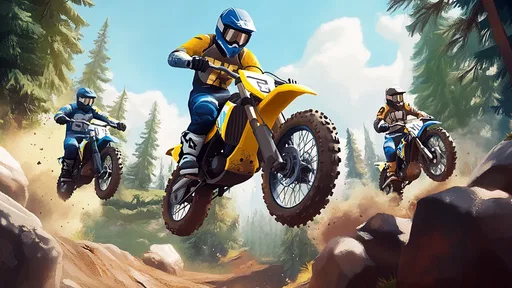

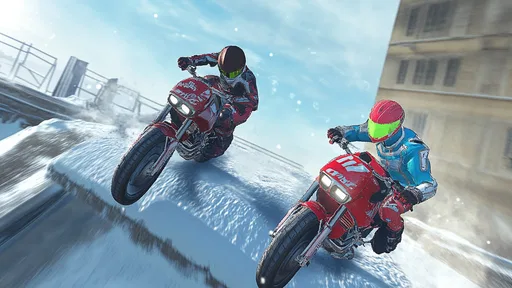
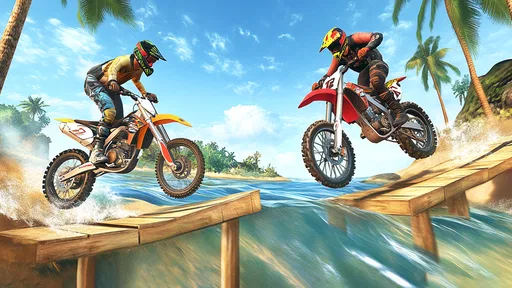

Our Review of Stunt Motorcycle Racing Game
 Analysis by Appyee
I spent time with Stunt Motorcycle Racing Game as a quick, action-focused racing game, and my first impression was clear: it is built around the appeal of controlling a motorcycle through stunt-oriented challenges rather than offering a broad racing simulation. The short store description calls it “Stunt Motorcycle,” while its wider promise is summed up as “Ride Hard, Race Harder.” That gives you a good idea of the intended mood: short bursts of concentration, risky movement, and the satisfaction of keeping a bike under control.
It is a free game from SUPERIOR STUDIO, listed for Everyone and available on devices running Android 6.0 or later. The current version is 1.2.4, and it has reached over five million installs with an average rating of 4.1 from around three thousand ratings. Those figures suggest that it has found a sizeable audience, but they do not change the most important question: whether this particular style of motorcycle racing suits the way you like to play.
How the game feels to read, control, and understand
I look at how the game’s visual presentation and controls shape the first few attempts, including what makes its stunt-racing idea easy to grasp and where quick movement can demand extra focus. One useful approach is to treat an early run as a chance to read the course, not as a test of speed; that makes the practical rhythm easier to understand.
A straightforward visual starting point
When I approach a stunt racing game, I want to understand the immediate objective without stopping to study a complicated interface. This title benefits from that kind of directness. Its central idea is easy to grasp: guide a motorcycle, handle the course, and push through the action without losing control. That makes it approachable for someone who does not usually play racing games, especially when compared with realistic motorcycle simulators that can overwhelm new players with technical settings and racing terminology.
The visual workload is still worth considering. Stunt courses naturally ask you to watch more than one thing at once: the bike’s position, the shape of the route, the timing of jumps, and the moment when a landing needs correction. For players with reduced visual attention or difficulty tracking fast movement, the challenge may come less from understanding the goal and more from keeping up with the screen. I found that the game is best enjoyed when I give it my full attention rather than trying to play while distracted.
That matters in everyday use. A short session during a commute, a break between tasks, or a few minutes before bed can work well if the surroundings are calm. In a busy room, however, I would expect missed turns and poorly timed corrections because stunt racing leaves little room for divided attention. The game’s simple premise helps, but the pace still demands visual focus.
Navigation that favors quick decisions
The strongest part of the experience is the low barrier to understanding what kind of game this is. I do not need to learn a complex career structure before enjoying the motorcycle handling. That makes it a reasonable choice for a casual player who wants immediate action instead of a long introduction.
The trade-off is that a compact racing game can provide less guidance than a larger console-style racing title. If you prefer detailed explanations, extensive practice areas, or a carefully staged tutorial for every mechanic, you may find the learning process more dependent on trying, failing, and adjusting. I see that as part of the genre’s appeal, but it is not ideal for every player.
One useful habit is to treat the first attempts as observation runs rather than races. Instead of trying to finish as quickly as possible, I focus on where the motorcycle begins to lose balance and which parts of the route require earlier input. This approach reduces frustration and makes the controls easier to read. It is especially helpful for players who process visual information more slowly and would rather build familiarity than react under pressure.
Text, contrast, and screen comfort
The main action is more important than reading large amounts of text, which is helpful for players who prefer visual instructions and immediate feedback. At the same time, a racing game can become tiring if the screen is bright, the motion is rapid, or the controls and course blend together. I recommend checking the game in the lighting where you normally play instead of judging it only in a bright room or at a store preview.
For longer sessions, I would also keep the phone at a comfortable distance and avoid increasing the challenge simply because a run went badly. Stunt games can encourage repeated attempts, and that repetition is enjoyable until visual fatigue turns small mistakes into constant failures. A short pause after several attempts is not just sensible; it can improve performance when you return.
Motor demands behind the simple premise
Although the concept is easy to understand, controlling a motorcycle through stunts can place steady demands on hand movement and timing. The player needs to make corrections at the right moment, often while the bike is airborne or approaching an uneven landing. That means the game may suit people who enjoy precise touch interaction, but it can be less comfortable for anyone with limited finger movement, tremors, reduced grip, or difficulty making repeated small adjustments.
I would not describe the game as a relaxed, one-input experience. Even if the controls are easy to learn, success depends on consistency. A player who can make quick, deliberate touches will probably settle in faster than someone who needs larger pauses between actions. This is one of the most important differences between “simple controls” and “low physical demand”: the first does not automatically guarantee the second.
A practical way to make play easier is to hold the phone securely before starting a run and use a position that does not force the wrist to bend. I prefer playing with both hands available, even when the game itself does not seem complicated, because it reduces the chance of shifting the device during a jump. That small adjustment helps preserve concentration and is useful for anyone who finds prolonged one-handed play tiring.
Sound, vibration, and sensory comfort
Racing games often communicate speed through movement, sound, and impact feedback. For some players, that combination makes the action feel exciting and helps them judge what is happening. For others, rapid motion or repeated effects can become uncomfortable. I would approach this title with the same caution I use for any stunt-focused game: try a short session first and notice whether the visual pace feels energizing or overwhelming.
If you are sensitive to loud audio, sudden effects, or busy movement, a quieter environment and a lower device volume may make the game easier to tolerate. If sound is not useful to you, the visual action becomes more important, so it is worth learning to recognize the motorcycle’s position from its movement rather than relying on audio cues. I would not choose this game specifically for a calm sensory experience; its appeal comes from motion and risk.
Players who use headphones should be especially mindful of session length and volume. The game is better treated as a focused activity than as background entertainment. I can imagine enjoying it while waiting for an appointment, but I would not recommend playing it while walking, crossing a street, or handling another task. The attention required by stunt timing makes those situations poor fits.
Who can use it comfortably in different situations?
The game makes the most sense for people who want a free motorcycle racing experience that can be picked up without a large commitment. It is suitable for a casual player who enjoys repeating a difficult section until the timing feels right. It can also work for someone introducing a younger player to racing games, since the age rating is Everyone and the basic objective is easy to explain.
That does not mean every child or adult will find it comfortable. A young player may understand the goal quickly but still struggle with the precision needed for stunts. An older player may enjoy the racing idea but prefer slower movement and larger visual targets. In both cases, I would judge the game by the player’s response to the controls rather than by the simplicity of its description.
For a realistic everyday scenario, imagine having ten minutes before leaving home. You can start a few attempts, learn how one section behaves, and stop without needing to remember a complicated storyline. That is where the game fits best for me: a compact challenge with a clear physical objective. If I am already tired, working in a noisy place, or trying to multitask, I get less from it because the necessary timing becomes harder to maintain.
Where it differs from other racing choices
Compared with a realistic motorcycle simulator, this game is more approachable because it centers on stunt action instead of demanding that the player understand real-world riding technique. I would choose it when I want quick experimentation and visible risk. I would choose a simulation-style alternative when I want careful cornering, authentic bike behavior, or a longer-term competitive structure.
It also differs from conventional car racing games. A car racer usually emphasizes route position, braking, overtaking, and lap consistency. A stunt motorcycle game puts more attention on balance, jumps, and recovering from awkward movement. If you enjoy the feeling of mastering a difficult physical sequence, that distinction is a strength. If you mainly want to race opponents through ordinary tracks, the focus may feel narrow.
Arcade racing alternatives can offer more variety in vehicles, environments, or progression, while this title’s identity is more specific. I would not install it expecting a complete racing collection. I would install it because motorcycle stunts are the part of racing I want to practice. That focused identity is useful for the right player, but it also explains why someone seeking broad content may move on quickly.
Small strategies that improve the experience
My first tip is to separate control learning from speed. Trying to go fast immediately can hide the reason a run failed. I get better results by watching the motorcycle’s position during a jump and making smaller corrections than my first instinct suggests. Once the landing becomes predictable, speed becomes much easier to manage.
My second tip is to use repeated attempts as a way to map the course mentally. I pay attention to the sequence of hazards rather than treating every failure as a separate surprise. This turns the game from a reaction test into a rhythm exercise. It is also a more inclusive approach because it gives players who need extra processing time a clear method for improving.
My third tip is to stop changing too many things at once. If I alter my grip, playing position, and timing after every failed run, I cannot tell what helped. I prefer changing one behavior—such as starting a correction earlier—and then checking whether the landing improves. That method is slower than random retries, but it produces more reliable progress.
A fourth consideration is device context. The minimum operating-system requirement is Android 6.0, so the game is not limited to only the newest Android phones. Still, the practical comfort of play depends on the device’s screen, touch response, and stability. A phone that feels cramped or has an unreliable touch area can make a precision stunt game feel harder than it should. I would test a brief session before deciding whether the difficulty comes from the game or the hardware.
Limitations that may change your decision
The main limitation is focus. This is not the right choice if you want a quiet game that can be played with minimal attention. Stunt racing asks you to watch movement and respond at the correct moment, so players looking for a passive or highly forgiving experience may become frustrated.
Another limitation is the narrowness of the fantasy. The motorcycle stunt theme is the reason to play, but it may also be the reason you stop. If you need deep customization, a large selection of racing formats, or a strong sense of long-term progression, a broader racing game may offer more value. I would not treat this title as a replacement for every other racing option.
There is also a physical trade-off. Repeated touch corrections can be tiring for some players, especially during long sessions. The free price makes experimenting easy, but it does not remove the need to consider comfort. I would rather play in short, deliberate bursts than keep retrying after my hands or eyes are already tired.
My inclusive verdict
I see this as a focused, accessible-to-understand motorcycle stunt game rather than a universally easy racing game. Its clear premise, free availability, Everyone rating, and broad Android compatibility make it inviting to try. Its strongest audience is made up of players who enjoy learning timing through repetition and want a quick challenge without the complexity of a full simulator.
For players with different visual, motor, or sensory needs, the experience depends heavily on personal tolerance for fast movement and repeated precision. I appreciate that the basic idea does not require specialist racing knowledge, but I would not overlook the physical demands hidden inside a simple stunt concept. A short test session is the best way to judge whether the controls and pace feel manageable.
My recommendation is therefore specific: choose it if you want motorcycle-focused stunt action, enjoy improving through trial and error, and can give the screen your attention for a few minutes at a time. Skip it if you need slow controls, extensive accessibility customization, realistic simulation, or a wide range of racing modes. In the right context, Stunt Motorcycle Racing Game is an enjoyable pick-up-and-practice challenge, and its focused design is more appealing than a generic racing formula when motorcycle stunts are exactly what you came to play.
Verdict
Strengths of Stunt Motorcycle Racing Game
- Simple controls make it easy to perform tricks and jumps.
- Short races are ideal for quick gaming sessions.
- Varied stunt tracks keep the challenges from feeling repetitive.
- Motorcycle upgrades add a sense of progression.
- Offline play makes it convenient when no internet is available.
Limitations of Stunt Motorcycle Racing Game
- Some levels rely heavily on trial and error.
- Physics can occasionally feel inconsistent during landings.
- Progress may become slower without upgrading the bike.
- Ads can interrupt the experience between races.
- Limited customization reduces long-term appeal for some players.
Other Releases by SUPERIOR STUDIO
View All
Motocross Bike Racing Game
Racing4.6
Similar Picks in This Category
View All
Hill Climb Racing
Fingersoft4.3

Dr. Driving
SUD Inc.4.2

Traffic Rider
skgames4.5

Asphalt 8 - Car Racing Game
Gameloft SE4.6

Race Master 3D: Car Racing
Beresnev Games4.6

Extreme Car Driving Simulator
AxesInMotion Racing4.3
Frequently Asked Questions
What is Stunt Motorcycle Racing Game?
Stunt Motorcycle Racing Game is an action-focused motorcycle game built around performing daring jumps, flips, wheelies, and obstacle-course challenges. Instead of simply racing from one point to another, you must control your bike carefully, maintain balance, and land tricks successfully. The game combines fast-paced driving with stunt gameplay, making it suitable for players who enjoy short, challenging levels and arcade-style motorcycle physics.
How do you play and control the motorcycle?
The game generally uses simple on-screen controls designed for mobile devices. Depending on the version and selected mode, you may use buttons or touch controls to accelerate, brake, tilt the motorcycle, and perform rotations while airborne. Although the controls are easy to understand, mastering them takes practice. Small mistakes in speed, balance, or landing angle can cause a crash, especially on ramps, narrow platforms, and moving obstacles.
Can Stunt Motorcycle Racing Game be played offline?
Many parts of Stunt Motorcycle Racing Game can usually be played without a constant internet connection, particularly the standard stunt levels and solo challenges. However, certain features may depend on internet access, including advertisements, online leaderboards, cloud saves, updates, or optional rewards. It is a good idea to launch the game once while connected so that its required files can finish loading before trying to play offline.
Does the game include ads, in-app purchases, or unlockable content?
The game may include advertising, especially between levels or after a failed attempt, as is common with free mobile racing games. Some versions can also offer optional purchases for removing ads, unlocking motorcycles, earning coins, or accessing additional content. You can normally play without spending money, but progression may be slower if premium upgrades or bonus rewards are available. Always review the store listing before downloading.
Is Stunt Motorcycle Racing Game suitable for beginners?
Yes, the game is generally accessible to beginners because its basic objective and controls are straightforward. New players can quickly learn how to accelerate, balance the motorcycle, and complete simple ramps. Nevertheless, later stages may become considerably more difficult, requiring precise timing and repeated attempts. Players who prefer realistic simulation may find the arcade physics unusual, while fans of casual stunt games will likely enjoy the quick and challenging gameplay.
Play our best games!


